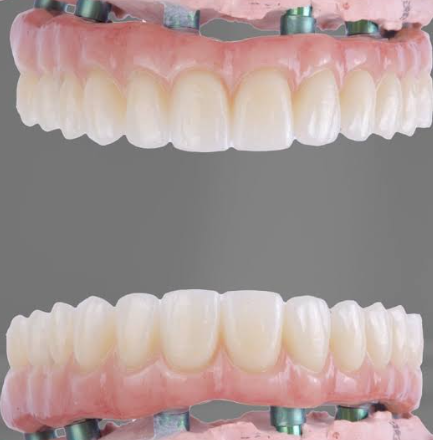
ou likely qualify for all-on-4 dental implants if you have enough jawbone to anchor four implants per arch, controlled gum disease, and a stable chronic health condition like managed diabetes — the fastest way to find out is a consultation and CT scan at Affordable Dentist Near Me in Fort Worth, Dallas, Houston, Waco, Grand Prairie or Crowley. Patients with significant bone loss, uncontrolled diabetes, or active infection usually need a workaround, not a flat no. This guide walks through the exact checks a dentist runs before approving the procedure in 2026.
All-on-4 implants replace a full arch of missing or failing teeth with four strategically placed implants and a fixed bridge, and the qualification bar is lower than most patients assume. The checklist below mirrors what a dentist reviews during a consultation, including the imaging, health history, and financing questions that come up at every Affordable Dentist Near Me location across Texas.
What You’ll Need
- A consultation booked with a dentist experienced in full-arch restoration, such as Affordable Dentist Near Me
- Recent dental X-rays or a CT scan (your dentist can take these on-site if you don’t have current ones)
- A list of current medications and chronic conditions, especially diabetes, osteoporosis, or autoimmune disorders
- Your dental insurance card or a plan to look into financing, including CareCredit
- 60-90 minutes for the initial exam and imaging review
Step 1: Count How Many Teeth You’re Missing or Losing
All-on-4 is built for patients missing most or all of their teeth in one or both arches, not for a single gap.
This matters because the procedure only makes financial and clinical sense when four or more teeth per arch are gone, failing, or too decayed to save. If you’re only missing one tooth, a single implant is almost always the better fit — see options for replacing a single missing tooth before assuming you need a full-arch solution.
Walk through your mouth arch by arch and note which teeth are loose, broken, or already extracted. Patients who qualify typically have widespread tooth loss or a full denture that no longer fits well. A common mistake here is assuming partial tooth loss automatically rules out implants entirely — it usually just changes which implant option fits.
Step 2: Check Your Jawbone Density
Your jawbone has to be dense enough to hold four implants at an angle that distributes bite force evenly.
Bone loss is the single biggest reason patients get told they don’t qualify for a standard full-arch implant plan, since teeth that have been missing for years let the surrounding bone shrink. A CT scan at a dental office measures bone height and width in minutes and gives a clear yes or no. If the scan shows significant loss, you’re not automatically disqualified — read about getting implants with bone loss and zygomatic implant alternatives for severe bone loss, which anchor into the cheekbone instead of the jaw.
Step 3: Get Your Gum Disease Under Control
Active gum disease has to be treated before implants go in, because infected gum tissue won’t hold an implant securely.
This step is non-negotiable in 2026 as much as it was a decade ago — implants placed into infected gum tissue fail at a much higher rate. If your gums bleed easily, are swollen, or you’ve been told you have periodontitis, that needs to be addressed first. Compare gum disease treatment options and ask whether gum disease can be reversed without surgery in your case. Most patients clear this step with a deep cleaning and a few weeks of healing.
Step 4: Review Chronic Conditions With Your Dentist
Conditions like diabetes, osteoporosis, and autoimmune disorders affect healing time and implant success, but they rarely disqualify you outright.
The key factor is control, not diagnosis. A patient with well-managed type 2 diabetes and stable blood sugar heals from implant surgery close to the same timeline as a patient without diabetes, according to guidance echoed by the American Academy of Periodontology. Read the full breakdown in th dental implants for diabetic patients guide before your consultation, and bring a current medication list so your dentist can flag anything that affects healing or sedation.
Step 5: Book a Consultation and CT Scan at Affordable Dentist Near Me
This is the step that actually answers your qualification question, because no amount of self-checking replaces a scan and an exam from a dentist trained in full-arch restoration.
Affordable Dentist Near Me runs this exact evaluation at locations in Fort Worth, Dallas, Houston, Waco, Grand Prairie and Crowley, and the appointment typically includes a visual exam, a CT scan to measure bone volume, a review of your health history, and a conversation about timeline and cost. Bring any existing X-rays, your medication list, and your insurance card if you have one. The dentist will tell you in that same visit whether you’re a straightforward candidate for all-on-4 dental implants, a candidate for a bone-graft-free alternative like zygomatic implants, or a better fit for a different restoration entirely, such as traditional dentures or a removable partial. Patients who’ve been turned away elsewhere are frequently still candidates once a current scan replaces old assumptions — if your last evaluation was more than a year or two ago, bone levels and gum health can change enough to shift the answer. This visit also surfaces whether all-on-4 implants are worth it given your specific mouth, rather than relying on general cost comparisons online. A common mistake is skipping this step and self-diagnosing as ineligible based on a Google search — bone density, gum health, and medical history are specific enough that only an in-person scan gives a reliable answer.
Step 6: Map Out Financing Before You Commit
Full-arch restoration is a significant expense, so knowing your payment path before surgery date avoids a mid-treatment scramble.
Check whether your dental insurance covers any portion — Delta Dental plans, for example, vary widely on all-on-4 coverage, and it’s worth confirming directly; see does Delta Dental cover all-on-4 implants. If insurance falls short, compare dental implant financing options and look at the CareCredit to dental implants workflow, which many patients use to spread payments over time. A common mistake is waiting until after the consultation to think about financing, which delays scheduling by weeks.
Step 7: Compare All-on-4 Against Other Full-Arch Options
All-on-4 isn’t the only full-arch solution, and your dentist should walk you through the alternatives before you sign off.
If your bone loss is too advanced or your budget points elsewhere, options include traditional implant-supported dentures, snap-in dentures, or a staged approach with bone grafting. Review all-on-4 alternatives for full-mouth restoration and full mouth dental implant options ranked by cost so you’re comparing against your specific exam results, not generic pricing.
Troubleshooting Common Qualification Roadblocks
“I was told I have too much bone loss for implants.” Ask specifically about zygomatic implants, which anchor into the cheekbone and skip the need for a bone graft — see the zygomatic implant alternatives guide.
“My insurance denied the claim.” Confirm whether the denial was for the implant itself or the attached crown/bridge — these are often billed separately, and a Delta Dental coverage check can clarify what’s actually excluded.
“I’m diabetic and nervous about healing.” Controlled blood sugar is the deciding factor, not the diagnosis itself — read the diabetic implant guide for what “controlled” means in practice.
“I’m worried about swelling or recovery time.” Some swelling is expected after all-on-4 surgery — see is swelling normal after all-on-4 surgery and recovery timelines so you know what’s typical versus what needs a call to your dentist.
“I don’t know if the cost is worth it long term.” Compare lifespan against the upfront cost — see how long all-on-4 implants last before deciding.
Tools and Resources Used in This Process
- CT scan / digital X-ray — the imaging that measures bone density; available on-site during a consultation at Affordable Dentist Near Me locations in Fort Worth, Dallas, Houston, Waco, Grand Prairie and Crowley
- Health history review — a written list of medications and chronic conditions speeds up the consultation
- CareCredit — a third-party financing option many patients use for full-arch procedures
- Delta Dental or your current insurer — call ahead to ask specifically about all-on-4 coverage before your appointment
FAQ
How do I know if I qualify for all-on-4 dental implants in Fort Worth?
The only reliable way is a CT scan and exam, which checks bone density, gum health, and medical history — Affordable Dentist Near Me offers this evaluation at its Fort Worth location and will give you a direct answer in the same visit.
Can I get all-on-4 implants in Houston or Dallas if I have bone loss?
Often yes — zygomatic implants, covered in the zygomatic alternatives guide, anchor into the cheekbone and skip the bone graft step that disqualifies some patients from standard all-on-4.
Does Affordable Dentist Near Me accept Medicaid for all-on-4 implants in Texas?
Coverage depends on the specific plan and procedure — check the Texas Medicaid adult dental coverage guide and ask your local office directly before assuming either way.
How much do all-on-4 dental implants typically cost?
Cost depends on how many implants you need and which arch is involved — see the full mouth implant cost comparison by ranking for a breakdown by option.
Can diabetic patients qualify for all-on-4 implants?
Yes, as long as blood sugar is controlled — read the dental implants for diabetic patients guide for what your dentist will check.
What happens if I don’t qualify for standard all-on-4 implants?
Your dentist will usually offer an alternative path, whether that’s a bone graft, a zygomatic implant, or a different full-arch restoration — this gets decided during the same consultation, not as a separate appointment.
See also: Improving Corporate Administration for International Business Owners
The Bottom Line
Most patients considering all-on-4 dental implants in 2026 qualify, or qualify for a close variation, once a current CT scan replaces guesswork. Start with Affordable Dentist Near Me in Fort Worth, Dallas, Houston, Waco, Grand Prairie or Crowley for the imaging and exam that actually answers the question, then use the financing and alternative-option guides above if the standard protocol doesn’t fit your bone density or budget. Skipping the scan and assuming you’re ineligible is the most common — and most avoidable — mistake in this whole process.