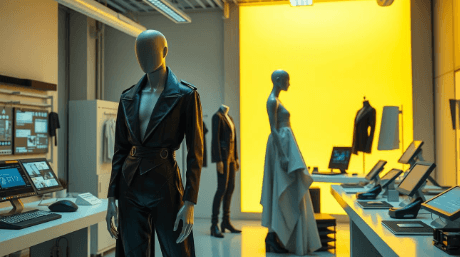
The transition from a creative spark to a physical garment has historically been the most challenging phase of fashion design. This journey involves a complex bridge called pattern making—the technical blueprint that determines how a flat piece of fabric transforms into a three-dimensional shape. For decades, this was a manual, time-consuming task prone to human error. However, with the integration of artificial intelligence, the industry is witnessing a revolution in garment generation, where patterns are no longer just drawn, but intelligently calculated.
The Traditional Bottleneck: Manual Drafting
In a conventional design studio, a pattern maker would take a designer’s 2D sketch and manually calculate the curves, seams, and measurements required to create a wearable item. This process often required multiple rounds of physical prototyping to get the fit right. If the “drape” wasn’t perfect, the pattern had to be re-drafted from scratch, leading to weeks of delay and significant material waste.
AI-powered tools have dismantled this bottleneck by automating the technical translation of a design. By using high-fidelity algorithms, designers can now generate precise patterns directly from a 3D digital model, ensuring that the transition from concept to creation is seamless and mathematically accurate.
How AI Streamlines the Drafting Process
AI doesn’t just automate the drawing of lines; it understands the physics of fashion. Modern AI-driven systems provide several key advantages to the technical design workflow:
1. Instant Pattern Extraction
Modern AI engines can analyze a 3D garment on a digital avatar and instantly “flatten” it into a set of 2D patterns. This bidirectional workflow means that any change made to the 3D drape is immediately reflected in the 2D pattern, and vice versa. This eliminates the need for manual recalculations and ensures that the final garment will fit exactly as seen on the screen.
2. Intelligent Grading
Grading—the process of creating different sizes for a single design—is notoriously difficult. Each size requires specific adjustments to maintain the original silhouette. AI-powered pattern making uses vast datasets of human body scans to automate this process, creating perfectly graded patterns for every body type in a matter of seconds.
3. Fabric-Specific Adjustments
Different fabrics react differently to the same pattern. A pattern for a denim jacket will not work for a silk blouse. AI tools can predict how specific textile properties will affect the fit and automatically adjust the pattern to account for shrinkage, stretch, and weight.
Enhancing Creativity Through Automation
When the technical burden of pattern making is handled by AI, designers are free to experiment. The fear of “failing” a complex design is removed because the AI can validate the construction in real-time. This allows for more daring silhouettes and innovative garment structures that would have been too risky or time-consuming to attempt manually.
Furthermore, AI-powered garment generation allows for “Parallel Design.” Instead of waiting for one stage to finish before starting the next, different teams can work on the texture, the pattern, and the marketing assets simultaneously within a shared digital ecosystem.
Sustainability: The Precision Factor
The environmental impact of the fashion industry is largely driven by waste. Manual pattern making often results in “over-sampling,” where dozens of prototypes are made and discarded. AI-driven precision ensures that the digital model is a 1:1 representation of the final product.
By perfecting the pattern in a virtual environment, brands can reduce physical sampling by up to 80%. This saves thousands of meters of fabric and significant amounts of energy. Additionally, AI can optimize “marker making”—the arrangement of pattern pieces on a fabric roll—to ensure the highest possible yield and the lowest amount of scrap waste.
The Future: AI-to-Factory Integration
The ultimate goal of AI-powered pattern making is a fully connected supply chain. In the near future, the AI-generated pattern will be sent directly to automated cutting machines at the factory, with no human intervention needed in between. This “Direct-to-Fabric” model will allow brands to respond to trends in real-time, producing small batches of clothes only when there is confirmed customer demand.
See also: Geotextile Fabric Under Pavers: The Key to a Strong and Long-Lasting Base
Conclusion
AI-powered pattern making is more than just a software upgrade; it is a fundamental shift in the logic of fashion production. By automating the technical bridge between a concept and a finished product, technology is making garment generation faster, more accurate, and significantly more sustainable.
As AI continues to learn the nuances of textile behavior and human anatomy, the distance between a designer’s imagination and a consumer’s wardrobe will continue to shrink. For the fashion industry, the result is a future where the only limit is creativity, not the technical constraints of the cutting table. The era of intelligent creation has arrived, and it is reshaping the world of style one pixel at a time.