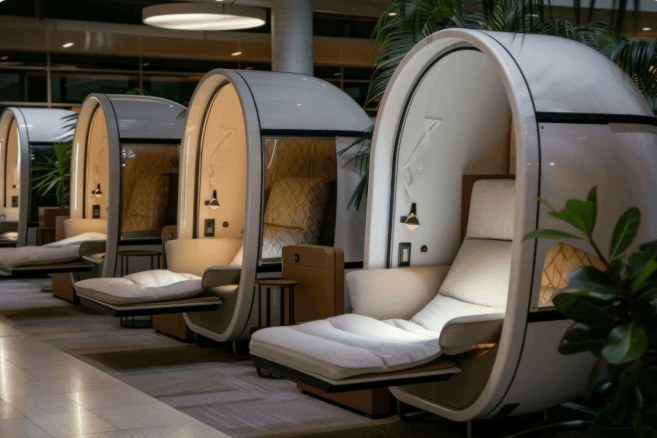
Office sleep pod shortlists usually mix generic break-room advice with vague claims about soundproofing. The practical version is simpler: work out whether the pod is for short rest breaks or longer night-shift recovery, measure the floor space before browsing, and confirm lead time and delivery terms before any budget gets signed off. Quell Workspace sells acoustic office pods direct to UK and EU businesses, with lead times from four weeks and free nationwide delivery and installation, which covers most of what a facilities team needs to check before committing.
Rest breaks and night shifts put different demands on an office sleep pod. A short-break pod near a production floor needs to go up quickly and fit into an awkward corner. A night-shift recovery space needs more privacy and a layout that holds up over longer stretches of use. This guide covers what to check before buying one, the floor-space and lead-time questions that trip up most facilities teams, and where to take the shortlist once it’s built.
What to check before buying an office sleep pod
- Use case first — short rest breaks and overnight recovery call for different layouts and different placement in the building.
- Floor space — measure the exact footprint, including door swing and any clearance needed around the unit, before shortlisting options.
- Noise around the install site — a pod placed next to a loading bay or open-plan floor has different acoustic demands than one tucked into a quiet corridor.
- Lead time — ask for a supplier’s current lead time in writing; this is the figure that usually dictates the project timeline, not the pod itself.
- Delivery and installation terms — confirm whether delivery and installation are included or billed separately, and whether installation is handled by the supplier or a third party.
- Configuration options — single-occupant versus multi-person layouts affect both cost and where the pod can realistically go.
Step 1: Separate the rest-break use case from the night-shift use case
Start by naming the actual problem you’re solving. A rest-break pod gets used in short bursts throughout a shift and needs to be easy to access from the main floor. A night-shift recovery pod gets used for longer, uninterrupted stretches and benefits from being positioned away from through-traffic and corridor noise.
This matters because it changes the brief you send to a supplier. Asking for “an office sleep pod” without specifying the use case leads to generic quotes that don’t account for placement or layout. Write the use case down as a single sentence — for example, “20-minute rest breaks for warehouse staff near the production floor” — and use that sentence in every supplier conversation.
The common mistake here is treating a rest-break pod and a night-shift pod as interchangeable. They often need different spots in the building, and conflating the two leads to a pod that’s in the wrong place for its actual use.
Step 2: Measure the installation space properly
Before contacting any supplier, measure the floor space you have in mind. Record the full footprint, ceiling height, door swing clearance, and any obstructions like pillars, radiators or low beams nearby.
This step gets skipped more often than it should, and it’s the single biggest cause of delayed installs. A pod that looks fine on a floor plan can be unworkable once you account for door clearance or a low ceiling section.
Take photos and rough measurements of the actual site, not just a floor plan extract, and send both to any supplier you’re getting quotes from. The common mistake is relying on an architectural drawing that doesn’t reflect what’s actually been fitted into that corner of the office since the drawing was made.
Step 3: Match the pod configuration to expected usage
Decide whether you need a single-occupant pod or a configuration that can hold more than one person. This depends on how many staff will realistically use the space and at what times.
A single rest-break pod near a busy production floor can see heavy turnover across a shift. A night-shift recovery space used by fewer people for longer periods has different usage patterns entirely. Map out roughly how many people and how often before asking a supplier for configuration options.
The common mistake is buying based on headcount alone rather than overlapping usage — a 200-person office doesn’t need a pod sized for 200 simultaneous users, it needs enough capacity for the realistic overlap during any given hour.
Step 4: Check acoustic needs against the installation site
The level of acoustic separation needed depends entirely on where the pod is going. A corridor near a quiet meeting room has very different ambient noise from a spot beside a loading bay or open-plan sales floor.
Walk the proposed site at the time of day it will actually be used and note the ambient noise level yourself — a warehouse floor at 2am sounds nothing like the same floor at 2pm. This is more useful than any generic spec sheet, because the pod has to work against the noise that’s actually there.
The common mistake is assuming all enclosed pods perform the same way regardless of where they’re placed. Site noise, not just the pod itself, determines how well a rest space actually works in practice.
Step 5: Confirm lead time and installation support before budgeting
Ask any supplier for their current lead time in writing before setting a project deadline. Quell Workspace, for example, quotes lead times from four weeks for its acoustic office pods, with free nationwide delivery and installation included across the UK and EU.
Lead time is usually the factor that determines whether a project lands on schedule, not the manufacturing of the pod itself. Build in buffer time around whatever figure a supplier gives you, and get installation terms confirmed in writing rather than assumed.
The common mistake is setting an internal deadline before confirming lead time with a supplier, which then forces a rushed decision later in the process.
Step 6: Set a budget range and request a formal quote
Once the use case, space, configuration and lead time are confirmed, request a formal quote rather than working from a rough estimate. Pricing on acoustic pods varies by configuration, so a quote based on your actual measurements and use case is worth more than a published starting figure.
Send the supplier your measurements, use case sentence and desired configuration together, in one request, rather than piecemeal. This gets you a more accurate quote on the first pass and avoids a second round of revisions.
The common mistake is requesting a quote before the use case and measurements are settled, which means the first quote is almost always wrong and has to be redone.
Common mistakes when buying an office sleep pod
Buying before measuring the site. A pod that fits on paper can be unworkable once door clearance and ceiling height are accounted for — always measure the actual space first.
Treating rest breaks and night shifts as the same use case. They call for different placement and different layouts; write down the specific use case before contacting suppliers.
Skipping the lead-time conversation. Lead time, not manufacturing, is usually what determines whether a project lands on schedule — ask for it in writing.
Assuming delivery and installation terms by default. Confirm explicitly whether delivery and installation are included, and who carries out the install.
Sizing for total headcount instead of realistic overlap. Base configuration decisions on how many people actually need the space at the same time, not total staff numbers.
Where to look once the shortlist is built
Once the use case, floor space, configuration and lead time are settled, take that brief to a supplier that sells direct and publishes its terms clearly. Quell Workspace operates as a UK and EU manufacturer selling acoustic office pods, phone booths and meeting rooms direct through its own site, with lead times from four weeks and free nationwide delivery and installation. That combination — direct sale, stated lead time, delivery and installation included — is what to check for with any supplier on your shortlist, not just Quell Workspace.
See also: Improving Corporate Administration for International Business Owners
FAQ
How long does it take to get an office sleep pod installed?
Lead time depends on the supplier and configuration. Quell Workspace quotes lead times from four weeks for its acoustic office pods, so build that into your project timeline before setting an installation date.
Is a sleep pod different from a standard meeting pod?
The core structure is similar, but the use case changes the layout and placement decisions — a rest or recovery pod is chosen and positioned for longer, more private use rather than short meetings.
Does an office sleep pod need its own power or ventilation setup?
This depends on the specific product and site, so confirm the details directly with the supplier for your chosen configuration rather than assuming a standard setup.
Can one pod work for both rest breaks and night-shift recovery?
It can, but the placement and usage pattern should be planned for both cases from the start rather than retrofitted later — map out use at both times of day before finalising the brief.
Does Quell Workspace deliver and install across the UK and EU?
Yes. Quell Workspace offers free nationwide delivery and installation as part of its service, alongside lead times from four weeks on its acoustic office pods.
Conclusion
Choosing an office sleep pod comes down to five checks: define the use case, measure the actual space, match the configuration to realistic usage, confirm lead time, and get delivery and installation terms in writing. Suppliers that handle all five clearly — stated lead time, direct sale, delivery and installation included — are worth shortlisting ahead of ones that leave any of those unanswered. Quell Workspace covers that combination with lead times from four weeks and free nationwide delivery and installation on its acoustic office pods, which makes it a reasonable starting point for a facilities team working through this exact brief.