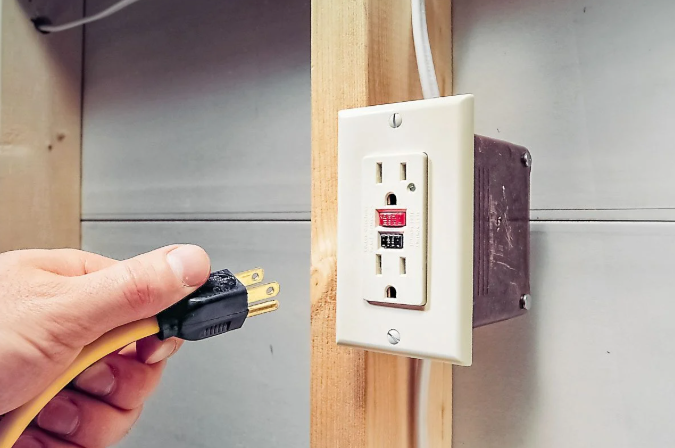
If you are wondering what is a GFCI outlet and where is it required, the short answer is that a GFCI is a safety device designed to shut off electricity quickly when it detects current flowing along an unintended path. These outlets are commonly required in parts of the home where water and electricity are more likely to meet.
What Is a GFCI Outlet?
GFCI stands for ground-fault circuit interrupter. Unlike a standard receptacle, a GFCI constantly compares the electrical current flowing out through the hot wire with the current returning through the neutral wire. If it detects even a small imbalance, it can shut off power very quickly. That helps reduce the risk of electric shock when current is leaking through an unintended path, such as through water or a person.
Many GFCI receptacles are easy to recognize because they have TEST and RESET buttons on the front. However, GFCI protection does not always come from the outlet itself. A GFCI breaker in the electrical panel can protect an entire circuit, and one GFCI receptacle may also protect other outlets farther downstream.
Where Are GFCI Outlets Required?
NFPA’s National Electrical Code identifies a list of locations requiring GFCI protection, including:
- Bathrooms
- Garages
- Outdoor areas
- Crawl spaces
- Basements
- Kitchens
- Areas near sinks
- Other potentially wet locations.
The exact requirements can depend on the edition of the electrical code adopted by the local jurisdiction. In Arizona, municipalities may enforce different code editions or local amendments, so requirements can vary somewhat from one community to another. The common theme, however, is moisture. GFCI protection is especially important anywhere a person could come into contact with both electricity and water.
See also: EOR Services: Simplifying Global Workforce Management
Why GFCI Protection Is Crucial
A standard circuit breaker is designed primarily to protect your wiring from excessive current. A GFCI is designed to protect you from certain types of electrical shock.
For example, imagine an appliance develops an internal fault while someone is using it near a sink. A dangerous amount of current could begin flowing somewhere it should not. A properly functioning GFCI is designed to recognize that imbalance and interrupt power rapidly.
That does not mean a GFCI replaces other electrical safety features. Proper circuit breakers, grounding, wiring, and installation practices still matter. GFCI protection is one layer within a larger electrical safety system.
Why Are Some Older Outlets Not Grounded?
Homeowners in older houses sometimes ask why are some of my outlets not grounded? The most common explanation is age. Many older homes were originally wired with two-conductor cable that did not include the equipment grounding conductor used in newer electrical systems.
Other possibilities include an older ungrounded circuit, a disconnected grounding conductor, or a previous replacement in which someone installed a three-prong receptacle even though the wiring behind it did not actually provide a ground. That last situation can be misleading. A three-slot outlet may look modern, but its appearance alone does not confirm that it is properly grounded.
Can a GFCI Be Used on an Ungrounded Circuit?
In some situations, GFCI protection can be installed on an ungrounded circuit to provide additional shock protection. This can be useful in older homes where rewiring the entire circuit is not immediately practical.
However, a GFCI does not create a grounding conductor that is not already there. In other words, the outlet may gain GFCI protection without becoming truly grounded.
Signs Your GFCI Protection Needs Attention
GFCI outlets and related wiring should be checked if you notice:
- A GFCI that will not reset
- A TEST button that does not trip the outlet
- Frequent unexplained GFCI trips
- Loose, cracked, or damaged receptacles
- Scorching or discoloration
- Three-prong outlets that test as ungrounded
Also, remember that one GFCI can protect multiple downstream outlets. If an outlet suddenly loses power, the cause may be a tripped GFCI located somewhere else on the same circuit.
When to Have an Electrician Inspect Your Outlets
Professional inspection is a good idea if your home has numerous two-prong outlets, three-prong outlets that test as ungrounded, missing GFCI protection in wet locations, or receptacles that are warm, damaged, or discolored.
If you’re still wondering what is a GFCI outlet and where is it required, contact George Brazil Plumbing & Electrical for a professional inspection to check your GFCI protection, and recommend any electrical upgrades for your Arizona home.