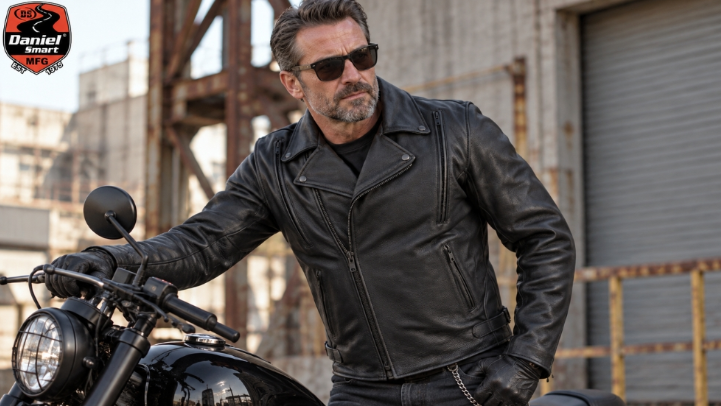
Motorcycle leather jackets with armor pockets are designed to let riders add impact protectors at key areas such as the shoulders, elbows, and back. The jacket provides the outer leather shell, while the armor inserts are intended to add impact protection where riders are more likely to experience contact during a fall.
Not every leather jacket includes armor pockets, and not every pocket is designed for the same type or size of protector. Riders should therefore look beyond appearance and check how the jacket is built, where the armor sits, whether inserts stay correctly positioned, and how the jacket fits once armor is installed.
Many men’s leather motorcycle jackets combine riding-focused construction with features such as armor-ready pockets, adjustable fit, secure closures, and mobility panels. Understanding how these features work helps riders choose a jacket that fits both their motorcycle and riding habits.
What Are Armor Pockets in a Motorcycle Leather Jacket?
Armor pockets are internal compartments built into a motorcycle jacket to hold removable protective inserts.
They are commonly placed at:
- Shoulders
- Elbows
- Back
Some jackets may also be compatible with additional protection depending on the design.
The purpose of the pocket is not only to hold the armor. It also needs to keep the protector aligned with the correct part of the body while the rider moves.
A shoulder protector that shifts away from the shoulder or an elbow insert that sits too low may not function as intended.
That makes pocket position and jacket fit equally important.
Why Do Motorcycle Leather Jackets Use Removable Armor?
Removable armor gives riders more flexibility.
A rider may want additional impact protection during highway rides but prefer a lighter setup for short rides or off-bike use. Removable inserts make that possible without requiring a completely different jacket.
Armor can also be replaced when it becomes worn, damaged, or no longer fits correctly.
This modular design makes the jacket easier to adapt over time.
Removable armor is also useful for riders who want to upgrade the inserts while keeping the same leather jacket.
What Areas Should Motorcycle Jacket Armor Cover?
The most common protection zones are the shoulders, elbows, and back.
These areas are frequently exposed during motorcycle falls because they may make contact with the road or another surface.
Shoulder Armor
Shoulder protectors should sit over the shoulder joint without restricting normal arm movement.
The jacket should keep them stable when the rider reaches toward the handlebars.
Elbow Armor
Elbow protection should cover the elbow area and remain aligned when the arm bends.
This is important because the rider’s elbow position changes between standing and riding.
Back Protection
Back armor generally sits along the central back area.
Some jackets include only a pocket, while others may come with a basic insert or allow riders to add a separate back protector.
The size and shape of the pocket determine what type of protector can be used.
How Should Armor Fit Inside a Motorcycle Jacket?
Armor should fit securely inside its designated pocket without excessive movement.
If the pocket is too large, the insert may shift.
If it is too small, the protector may fold, bunch, or sit incorrectly.
The ideal setup keeps the armor close to the intended body area while still allowing normal movement.
A rider should check armor position while:
- Standing
- Sitting
- Reaching forward
- Bending the elbows
- Turning the upper body
This gives a better idea of how the jacket behaves in actual riding conditions.
Why Does Jacket Fit Matter When Using Armor?
Armor changes the internal volume of a motorcycle jacket.
A leather jacket that fits tightly without armor may become restrictive once shoulder, elbow, and back inserts are added.
This can reduce:
- Shoulder movement
- Elbow flexibility
- Chest comfort
- Layering space
- Riding-position mobility
On the other hand, buying an excessively loose jacket just to create more armor room can create its own problems.
A loose jacket may allow armor to move away from the correct impact area.
The best approach is a riding-specific fit that accounts for armor from the beginning.
Should You Size Up for Motorcycle Armor?
Not automatically.
A properly designed motorcycle leather jacket should already account for the space needed by its intended armor system.
Sizing up too much may make the jacket unstable or allow the protective inserts to shift.
Instead of choosing a larger size by default, riders should:
- Check the manufacturer’s sizing information
- Confirm whether armor is included or optional
- Try the jacket with armor installed
- Simulate a riding position
- Check shoulder and elbow alignment
The goal is secure fit with enough mobility, not simply extra space.
How Can You Tell Whether Armor Is Positioned Correctly?
Armor should stay centered over the body area it is meant to protect.
For shoulder inserts, check that the protector remains over the shoulder even when the arms are extended.
For elbow armor, bend the arm and make sure the insert does not slide too far above or below the elbow.
For back protection, check whether the protector sits flat and centered.
Common signs of poor positioning include:
- Armor sliding around inside the pocket
- Elbow inserts sitting below the elbow
- Shoulder protectors moving toward the chest or back
- Armor creating uncomfortable pressure points
- Back protection folding or twisting
Proper pocket construction and correct jacket sizing help reduce these issues.
Are All Motorcycle Jacket Armor Pockets the Same?
No.
Armor pockets can vary significantly in size, shape, access, and adjustability.
Some pockets are designed for one specific protector shape. Others may accept several compatible inserts.
Certain jackets also provide adjustment inside the pocket so the rider can change the armor position slightly.
This can be useful because riders have different arm lengths and body proportions.
Before buying replacement or upgraded armor, riders should confirm that the dimensions and shape match the jacket pocket.
Does Leather Replace the Need for Armor?
No. Leather and armor serve different functions.
Leather motorcycle jackets are commonly valued for abrasion resistance, durability, and coverage.
Armor is intended to add impact protection around specific areas.
One does not perform exactly the same job as the other.
A riding jacket can therefore combine a durable leather outer shell with strategically positioned impact protectors.
This layered approach explains why many motorcycle-specific jackets include internal armor pockets rather than relying on leather alone.
Should a Motorcycle Leather Jacket Come with Armor Already Installed?
That depends on the jacket and rider preference.
Some riders prefer a jacket that includes armor from the start because the inserts are selected for that particular design.
Others prefer armor-ready pockets because they want to choose their own protection.
Both approaches can work.
If armor is included, riders should still inspect:
- Position
- Comfort
- Thickness
- Flexibility
- Coverage
If armor is sold separately, confirm compatibility before purchasing inserts.
How Does Armor Affect Comfort on Long Rides?
Armor adds structure and thickness to a motorcycle jacket.
Poorly fitted inserts can create pressure points, especially around the shoulders, elbows, and back.
Well-positioned armor should move with the rider without becoming distracting.
Long-distance riders should pay particular attention to:
- Shoulder pressure
- Elbow bending
- Back stiffness
- Heat buildup
- Sleeve movement
Modern protective inserts can vary in flexibility, so some feel more noticeable than others.
The best setup balances impact protection with enough flexibility for several hours in the riding position.
See also: The Role of SEO, Web Development and Digital Marketing in Business Growth
Does Armor Make a Leather Motorcycle Jacket Hotter?
It can.
Protective inserts may reduce airflow where they sit against the body.
Back protectors can be especially noticeable because they cover a relatively large area.
Ventilation around the armor becomes important in warm conditions.
Useful jacket features may include:
- Perforated leather
- Front vents
- Rear exhaust vents
- Underarm airflow
- Breathable lining
- Removable thermal liners
Riders who frequently ride in warm weather should consider how the armor and ventilation systems work together.
What Should Riders Check Around the Elbow Armor Area?
Elbow armor needs to remain correctly positioned when the rider bends the arm.
This area should be checked carefully because sleeves naturally shift while riding.
A good jacket should allow enough articulation at the elbow without causing the protector to move excessively.
Useful design features may include:
- Pre-curved sleeves
- Articulated elbows
- Proper sleeve length
- Secure armor pockets
- Adjustment systems
A jacket that fits well while standing may behave differently once the rider reaches for the handlebars.
That is why riding-position testing matters.
What Should Riders Check Around the Shoulder Armor?
Shoulder armor should remain stable without restricting arm movement.
When testing the jacket, move the arms forward, upward, and outward.
If the shoulder protector shifts dramatically or presses uncomfortably into the body, the jacket may not fit correctly.
Action backs, shoulder gussets, and riding-oriented sleeve construction can help improve movement around this area.
The goal is to keep the protection in place while allowing normal control of the motorcycle.
How Does Back Armor Change Jacket Fit?
Back armor can change how the entire jacket sits.
A thick insert may push the jacket slightly outward, reducing space around the chest or shoulders.
It may also affect how the collar and waist feel.
Riders should therefore test the jacket with the back protector installed rather than assuming the fit will remain the same.
If the jacket uses a removable liner, also consider whether the liner and back protector will be used together.
Leather vs Textile Jackets with Armor Pockets
Both leather and textile motorcycle jackets can include armor pockets.
The main difference is the outer construction and how each material handles weight, airflow, flexibility, and weather.
Leather jackets are often chosen for their abrasion resistance, structured fit, durability, and traditional motorcycle appearance.
Men’s textile motorcycle jackets may provide different ventilation, weight, and weather-management options depending on their construction.
Armor compatibility should therefore be evaluated separately from the outer material.
A rider should ask:
- Does the jacket hold the armor correctly?
- Does it remain comfortable while riding?
- Does the material fit the climate?
- Does the jacket provide the mobility needed for the motorcycle?
The best option depends on the complete riding setup rather than one material alone.
What Should You Check Before Buying an Armor-Ready Leather Jacket?
Before purchasing, review the jacket as a complete system.
Check:
- Which armor pockets are included
- Whether armor comes with the jacket
- Which armor sizes fit
- Whether the pockets allow adjustment
- Shoulder alignment
- Elbow placement
- Back protector compatibility
- Riding-position mobility
- Sleeve length
- Ventilation
- Liner space
- Waist adjustment
These details matter more than simply seeing the words “armor ready” in a product description.
Can You Upgrade the Armor Later?
In many cases, yes, provided the new inserts fit the existing pockets correctly.
This is one advantage of removable armor.
Riders can potentially replace inserts as their preferences change.
Before upgrading, measure the original pocket or check compatible dimensions.
A larger protector is not automatically better if it does not sit correctly.
Correct placement remains essential.
Final Thoughts
Motorcycle leather jackets with armor pockets combine a durable outer riding layer with the ability to add impact protection at key areas such as the shoulders, elbows, and back.
The most important factor is not simply whether the jacket has armor pockets. Riders should check how well the pockets position the protectors, whether the jacket remains comfortable with armor installed, and whether movement remains natural in the riding position.
Proper fit helps keep armor aligned. Pre-curved sleeves, flexible shoulder construction, ventilation, secure pockets, and appropriate sizing can make the complete setup more comfortable and practical.
A good armor-ready leather motorcycle jacket should allow protection and mobility to work together rather than forcing the rider to choose between the two.