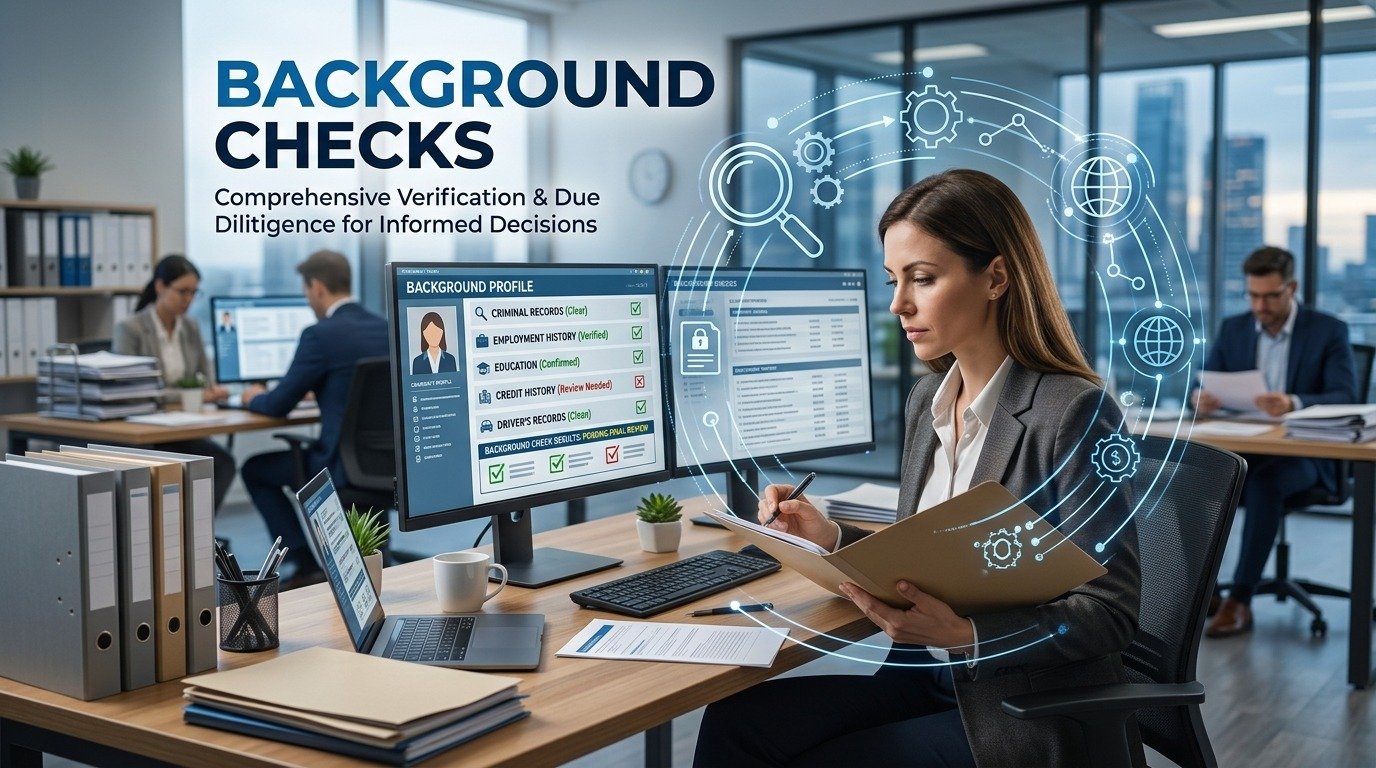
A background check can tell a business who someone is. A smart background check goes further by helping determine what that identity means from a risk perspective. This matters when businesses onboard customers, assess beneficial owners, or conduct employee background checks for sensitive roles. In AML, the process also needs to look at factors such as sanctions, PEP status, adverse media, and ownership links. The goal is not to collect more information. It is to find the information that can actually affect a risk decision.
What Is a Smart Background Check?
A smart background check combines information from various sources to create a more comprehensive profile of a person or business. It links relevant information together to the person or entity that is being reviewed, instead of using one database or one search. This may involve identity verification, sanctions screening, screening for PEP, adverse media, beneficial ownership, regulatory information, and a range of other matters for an AML team. The purpose is not to collect as much information as possible. Its aim is to locate information that enables it to make a decision on the true risk of the customer. This is consistent with the principles of customer due diligence which are risk based. FinCEN requires covered financial institutions to know the nature and purpose of customer relationships, to establish customer risk profiles, and to engage in continuous monitoring.
How Does an AML Background Check Work?
The AML background check begins with the basic information on the customer. This can be used as the starting point for additional screening, including the name, date of birth, nationality, company information and ownership details. The customer can then be cross-referenced with relevant risk sources. These include sanctions lists, politically exposed person databases, adverse media, and other data that could indicate financial crime exposure. The depth of the check should be based on the risk of the customer. A simple customer profile may need less investigation than a company with complex ownership, links to high-risk jurisdictions, or unusual financial activity. This risk-based approach is consistent with the guidance issued by FinCEN. It states that customer information should be maintained and updated when monitoring identifies changes that are relevant to the customer’s risk profile.
Why Does a Customer Background Check Matter?
A customer background check can show information that is not presented in a standard customer onboarding. Valid registration documentation can exist within a company, and the ownership links may need further investigation. A person can also fail the basic identity verification without being listed on a sanctions or PEP database. This is not an automatic indicator that the customer is a financial crime participant. It provides the compliance team with a justification for investigating the link. The concept of beneficial ownership is particularly relevant to this. Under the current CDD requirements of the regulations and the relief provided by FinCEN, covered financial institutions are required to identify and verify the beneficial owners of legal entity customers. A smarter background check, therefore, goes past the individual who is opening the account. It also takes into account the ownership or control of the relationship.
See also: Maximize Business Efficiency with Virtual Office Services
How Can Smart Background Checks Support Ongoing AML Monitoring?
A smart background check is more useful when coupled with continuous monitoring. It is possible to screen a customer at the time of onboarding and re-check when relevant risk information becomes available. When new sanctions listings, PEP connections, adverse media, ownership changes or other developments emerge, it may result in additional investigation. This provides a more rounded view of the risk of the customer. It is also in line with the broader justification of continuous Customer Due Diligence. According to FinCEN, monitoring is supposed to help detect suspicious transactions and update and keep current customer information based on risk. For compliance teams, this translates to background screening becoming more of a bigger part of the AML process than a standalone onboarding measure.
Making Smart Background Checks Part of Better AML Decisions
A smart background check is not about searching more information simply for the sake of it. It is about connecting the information that matters and giving analysts enough context to assess risk. AML Watcher brings sanctions screening, PEP screening, adverse media screening, and ongoing monitoring into a connected AML workflow. This helps compliance teams review different risk signals together instead of relying on a single background check result. The result is a more practical approach to customer risk. For teams looking to make background screening more connected and risk-focused, AML Watcher provides the tools to support better AML decisions from onboarding through ongoing monitoring. Explore AML Watcher to see how smarter screening can fit into the wider compliance process.