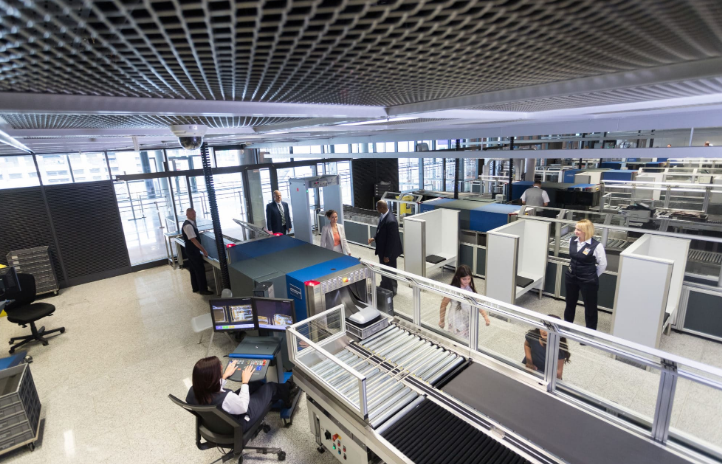
Have you ever wondered what goes on behind the scenes when your luggage is whisked away on those conveyor belts at the airport? Well, the technology has come a long way from just simple X-ray machines and manual checks. In today’s world, airports are deploying some seriously advanced tech to ensure safety without causing too much inconvenience.
At the forefront of this revolution are AI-powered scanners that have a knack for catching what the human eye might miss. Combining high-tech imaging with artificial intelligence, these machines are setting new standards in security. It’s like having a super-sleuth on duty 24/7, scanning every nook and cranny of your bag.
Ai’s role in making travel safer
How machine learning identifies threats
Machine learning isn’t just a buzzword thrown around in tech circles; it’s actually doing some pretty impressive stuff in airport security. These smart systems can be trained to recognize patterns and anomalies that could indicate a threat. Imagine a machine that learns from millions of bag scans, getting better and more accurate over time. It’s like having an experienced security officer who never gets tired or distracted.
These AI systems can analyze vast amounts of data in real-time, identifying potential threats faster than any human ever could. By comparing the contents of each bag against a library of known threats, they can flag suspicious items instantly. This not only speeds up the process but also significantly reduces the chances of dangerous items slipping through.
Real-time data analysis for quick decisions
The magic doesn’t stop at identifying threats. Real-time data analysis allows these systems to make quick decisions, ensuring that security personnel get instant alerts. This rapid response capability is crucial in preventing potential incidents before they escalate. Picture a scenario where a potential threat is identified within seconds, allowing security staff to act immediately.
Moreover, these systems continue to learn and evolve. With each scan, the AI becomes more adept at distinguishing between harmless items and potential threats. This continuous improvement loop ensures that the technology stays ahead of new types of threats, keeping travelers safe and secure.
Chemical detection goes high-tech
Explosives and narcotics detection has always been a critical component of airport security. But traditional methods often fell short, either being too slow or not sensitive enough. Enter high-tech chemical detection systems, which use advanced technologies like Ion Mobility Spectrometry and Raman Spectroscopy to identify even trace amounts of dangerous substances. For instance, the latest advancements in explosives detection enable the identification of hazardous materials with unprecedented accuracy and speed.
These systems are incredibly sensitive and can detect minute quantities of explosives or narcotics, even if they’re cleverly concealed. They work by analyzing the chemical composition of particles found on surfaces or in the air, providing a detailed breakdown that helps identify potential threats. It’s like having a microscopic detective sniffing out danger at a molecular level.
What’s even more impressive is their portability. Handheld models allow security personnel to perform checks anywhere within the airport, ensuring comprehensive coverage without causing delays or disruptions. These devices are game-changers, making it easier to maintain high security standards without compromising on efficiency.
Cutting-edge imaging: seeing beyond the visible
Traditional X-ray machines are pretty good at showing what’s inside your bag, but they have their limitations. That’s why incorporating advanced xray suitcase scanners offers a more detailed inspection, reducing the chances of dangerous items being missed. That’s where cutting-edge imaging technology comes into play. Systems like dual-energy CT and multi-view X-ray technology provide incredibly detailed images that go beyond what standard X-rays can offer.
These advanced imaging techniques allow for a more thorough examination of baggage contents, highlighting details that might be missed otherwise. For example, dual-energy CT scanners can differentiate between different types of materials based on their density and atomic number. This makes it easier to spot items that look suspicious or out of place.
Multi-view X-ray technology takes it a step further by providing multiple angles of the same object. This 3D-like visualization helps security personnel get a complete picture of what’s inside the bag, reducing the chances of anything slipping through undetected. It’s like having X-ray vision from every angle—pretty cool, right?
See also: Business Growth Hacks You Need to Know
The future of airport security: what’s next?
So, what does the future hold for airport security? Well, it’s safe to say that technology will continue to play a pivotal role. We’re looking at an era where AI and machine learning will become even more integrated into security protocols, making travel safer and more efficient.
Expect to see more intelligent systems that can adapt to new threats in real-time, providing an ever-evolving layer of protection. And with advancements in chemical detection and imaging technologies, airports will be better equipped to handle the complexities of modern security challenges.
In short, while we may never eliminate all risks entirely, these technological advancements are making significant strides in keeping us safe when we fly. So next time you’re at an airport, just remember: there’s a whole lot of smart tech working behind the scenes to ensure you reach your destination safely.